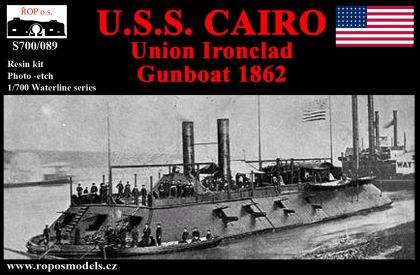
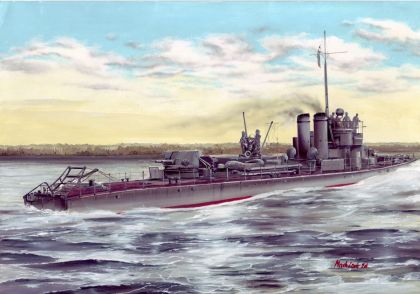
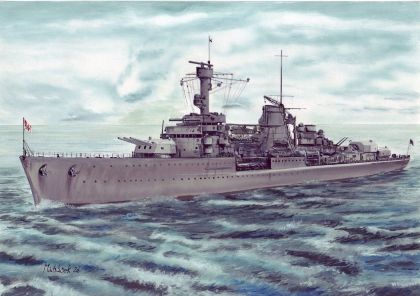
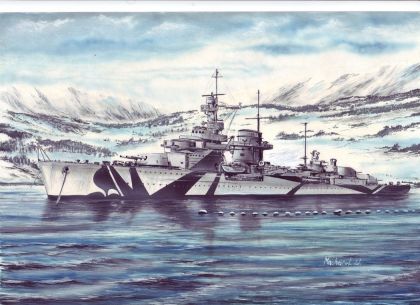
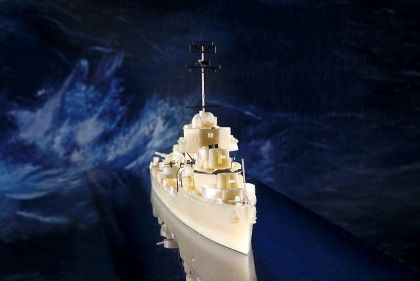
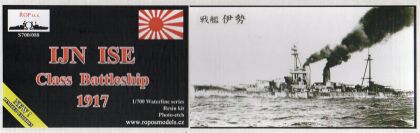
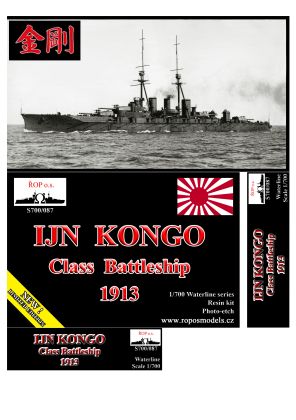
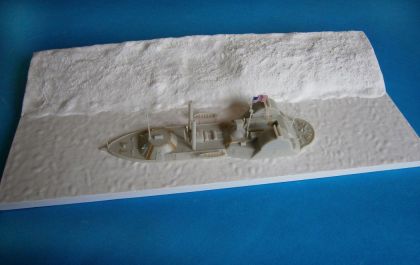
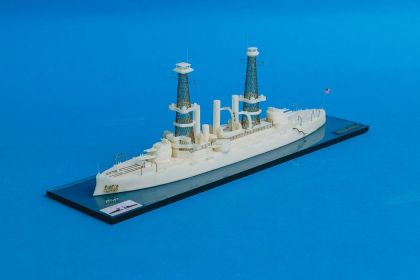
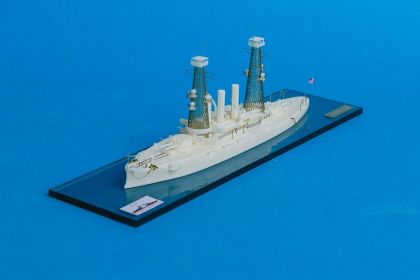
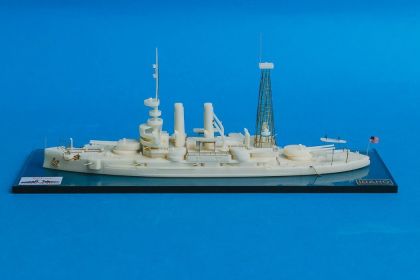
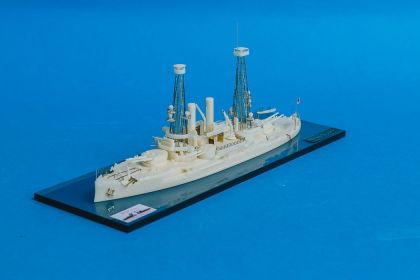
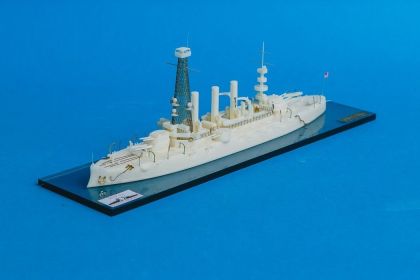
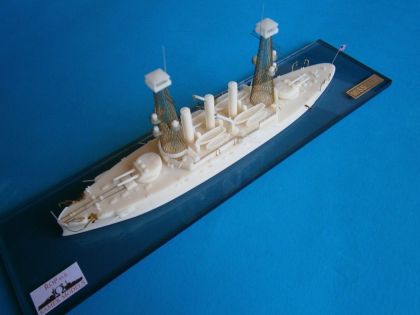
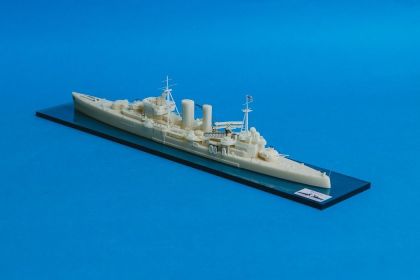
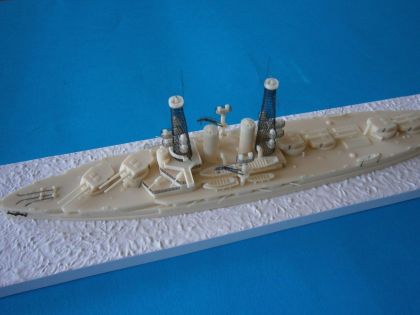
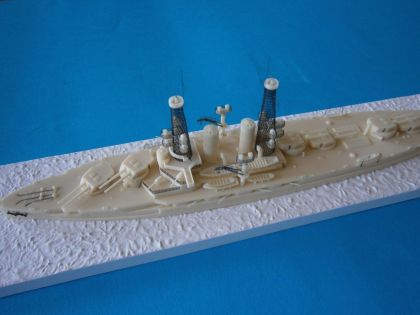
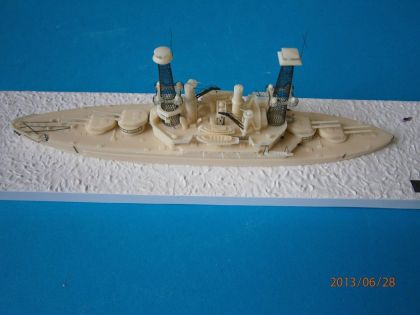
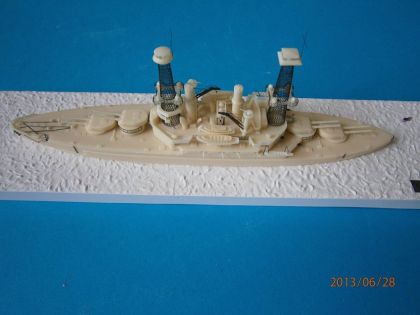
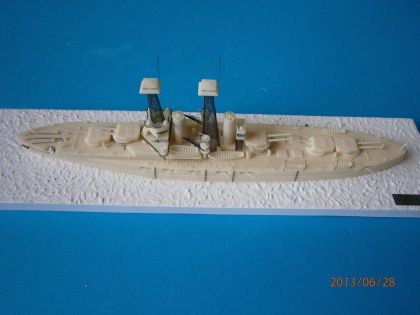
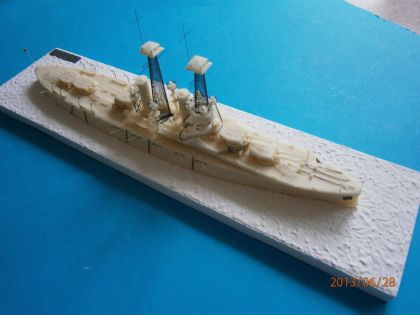
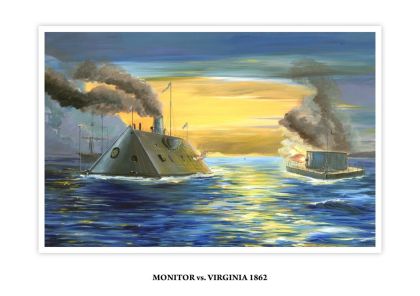
Having a whole fleet on one shelf is what 1:700 is for, and this selection is built around series rather than single showpieces. It runs through a line of American battleships from the pre-dreadnoughts to units of the end of the First World War, American large cruisers, Japanese ships of the first half of the twentieth century, British battleships, heavy cruisers and destroyers, German battleships, cruisers, destroyers and landing craft, a modern Russian submarine, and armoured vessels of the American Civil War. Lengths run from a few centimetres for a landing craft to thirty-five or thirty-six centimetres for the largest capital ships. Collected together, they show changes you can never see on one model.
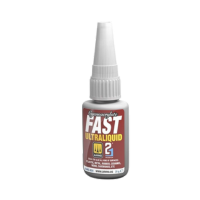
The kits are small-run resin, supplied unpainted. Count on washing off the mould release, sawing away the pour block and assembling with cyanoacrylate.
1:700 holds a particular place among ship modellers: small enough to collect in quantity, large enough that railings and armament can still be done properly. Where 1:350 takes one ship, this scale takes several, and that makes comparison possible. The way turret arrangements developed on battleships across two decades is something no single model will ever show you.
The hull casting usually comes in one piece. Saw the pour block away and flatten the seating face on abrasive paper laid on a flat board, so the ship does not sit askew. On a waterline model the underside is hidden in any case, so it need not look tidy.
Chasing rivets is pointless at 1:700, but etched railings and ladders are not: they are what separate a finished model from a casting. Generic sets in 1:700 photo-etched parts cover most needs, and a 1:700 wooden deck suits a planked deck. Fit railings before the masts go on, not after.
Ships from the 1860s, from 1904 and from the Second World War do not share a shelf comfortably; their silhouettes, colours and sizes are too different. Picking a period and building two or three ships from it gives a far better display than one example of each.
Scale effect is severe here, so lighten base tones and keep shading subtle. Planking, linoleum and steel want separate colours but similar values. Weathering works best as a single overall tone shift plus a hint of rust at the hawse and waterline; streaking that looks right at 1:350 looks like damage at this size.
Everything the association casts for ship modellers is in the ŘOP ships section.