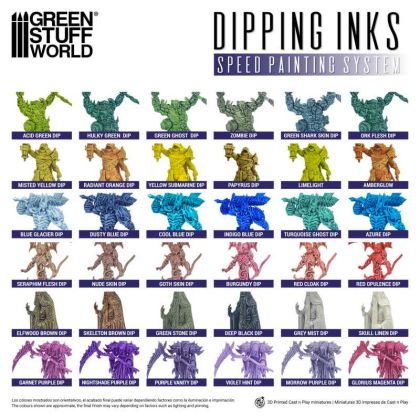
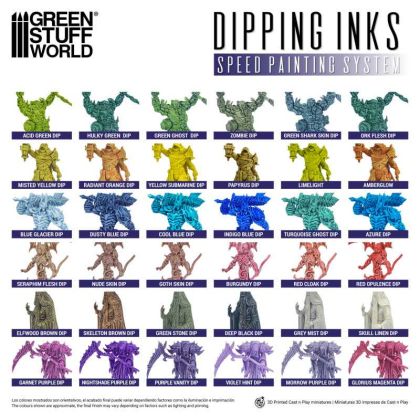
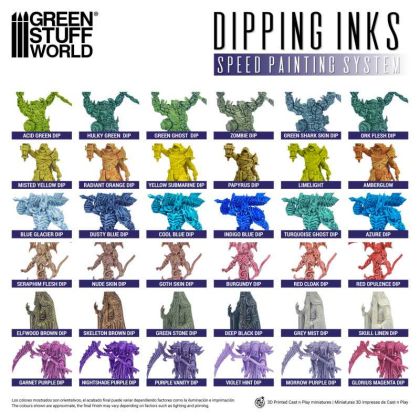
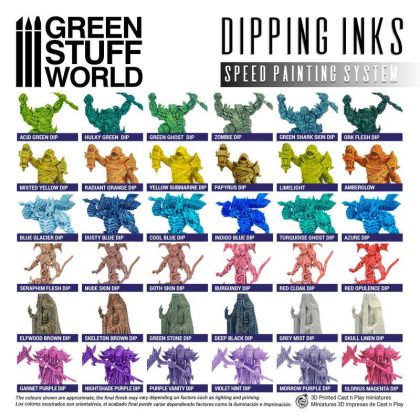
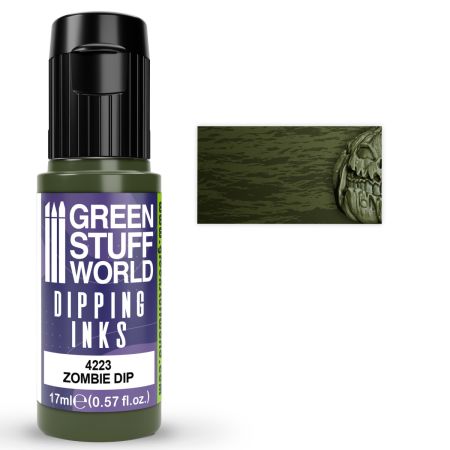
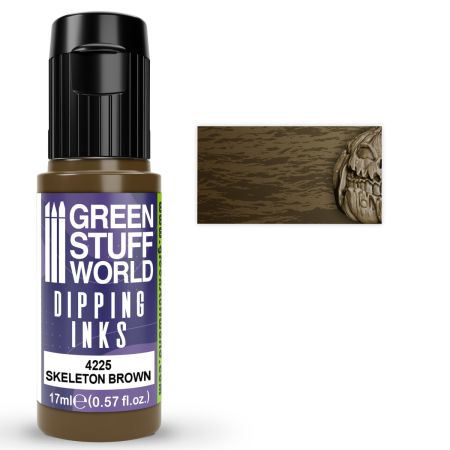
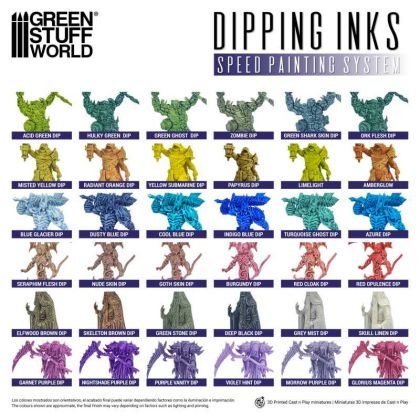
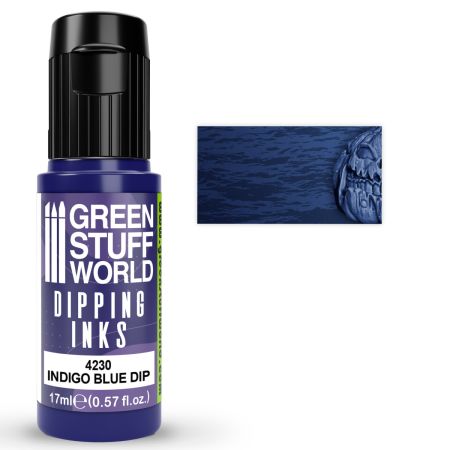
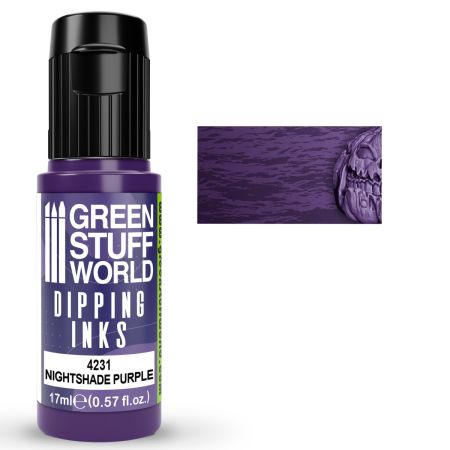
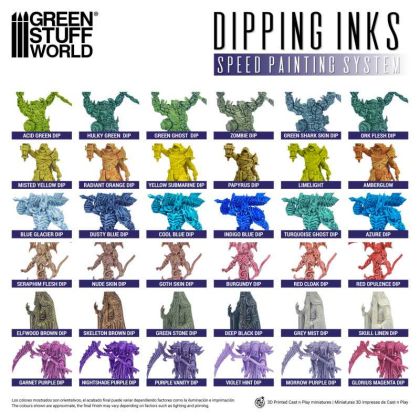
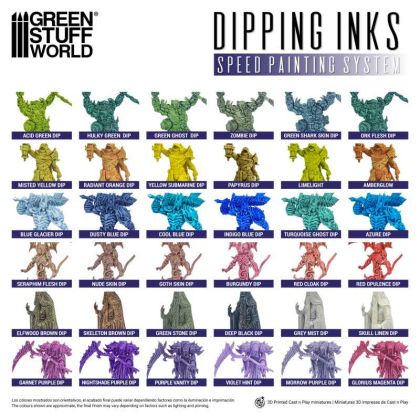
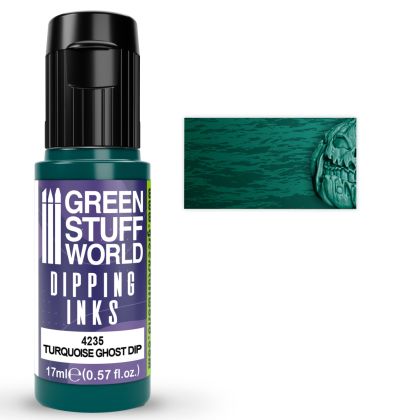
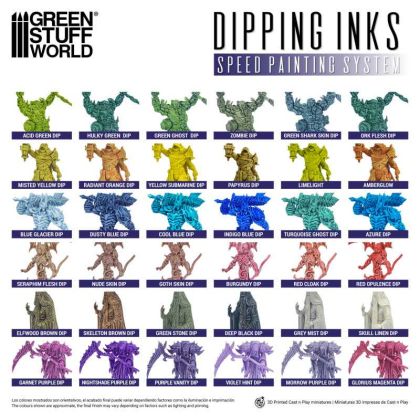
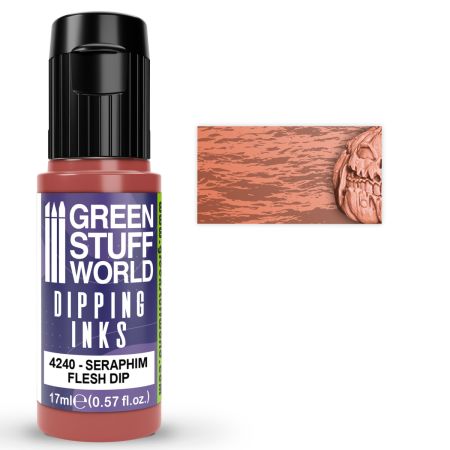
Dipping inks create depth in a single step. Flood or dip the model, the ink runs into the folds and stays darker there than on the raised surfaces once dry. The selection runs to dozens of shades, from browns and blues through greens, purples and toxic tones, in small droppers as well as sixty-millilitre bottles.
For a gaming army this is the quickest route to a unit that looks coherent on the table. For a collector it is a fast underpainting to build conventional acrylic over. Either way the technique rewards nerve: you flood, you lift the excess, and then you leave it alone.
It is a heavily pigmented ink thinned so that it flows freely and settles by itself. You apply an amount that would be wasteful with ordinary paint: the whole surface is flooded and the liquid finds its own way. More of it stays in the deep places, which darken, while the film thins on edges and lightens there. The result is finished volume without a single blended brush stroke.
The range of shades is not merely cosmetic. Browns suit leather, wood and metal; blues and greys suit white cloth and snow; greens and toxic tones suit organic forms and fantasy creatures.
Load a large brush or a pipette and cover the area in one go. Any excess hanging as a bead on the lower edge should be lifted immediately with a dry brush. After that, stop touching it, or you will leave dark scars in the drying film.
On an absorbent matt coat the ink soaks in wherever it is touched and leaves blotches. Seal the surface with a thin satin layer from varnishes first. The same logic applies to value: the lighter the base, the stronger the contrast.
A dropper does one figure; a whole unit or literal dipping calls for the larger bottle. For mixing your own shades, the tools are in bottles, pipettes and palettes.
The rest of the maker's catalogue, opaque and effect paints included, is in Green Stuff World acrylic paints.