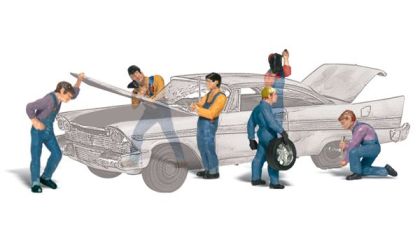
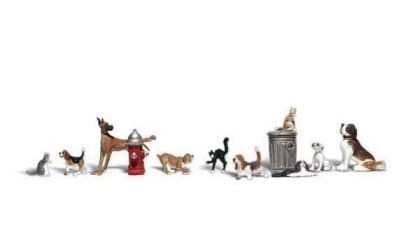
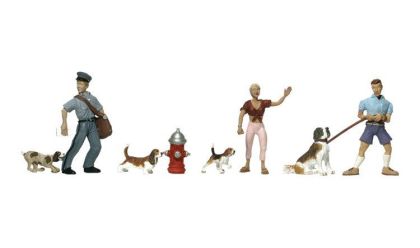
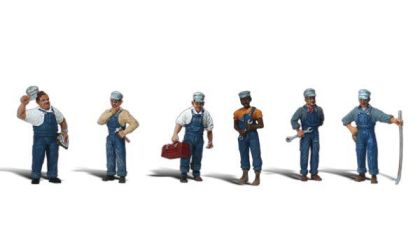
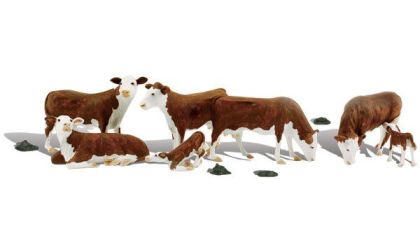
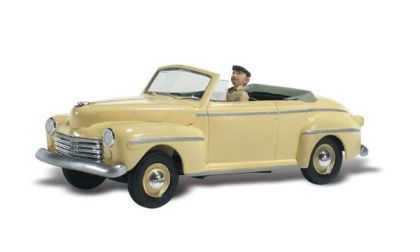
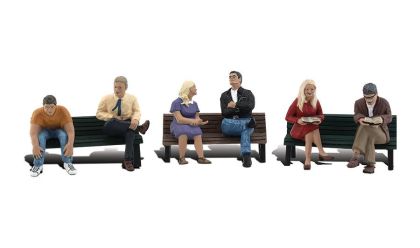
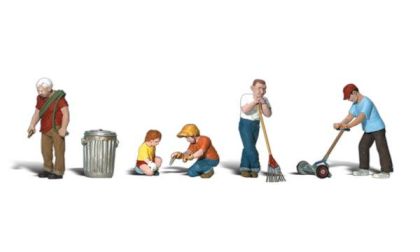
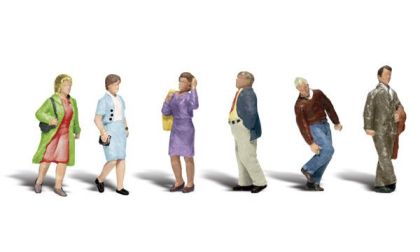
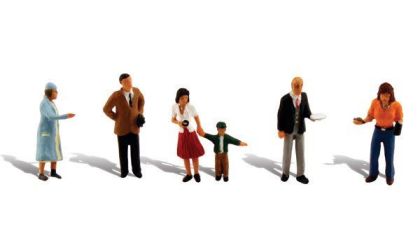
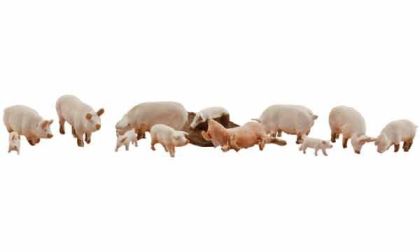
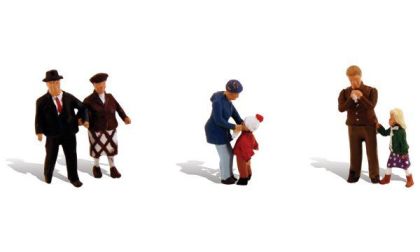
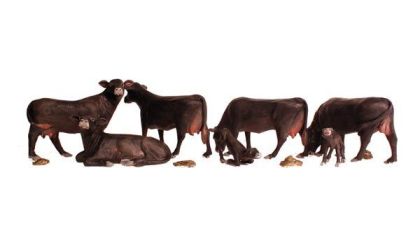
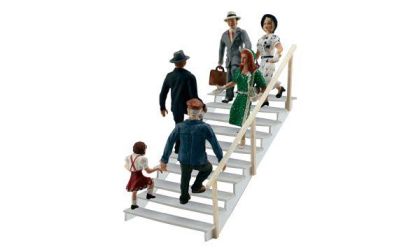
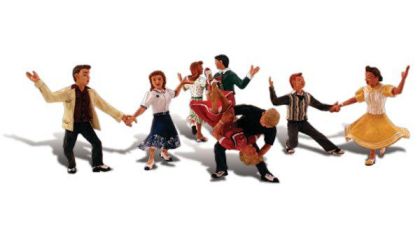
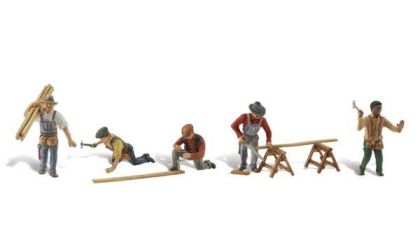
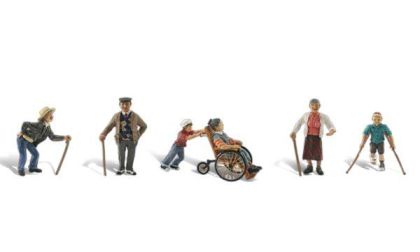
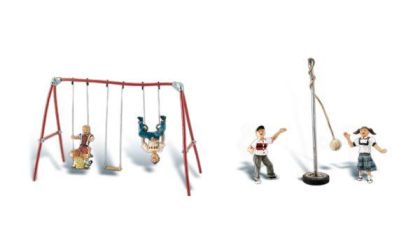
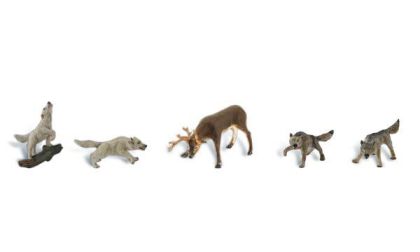
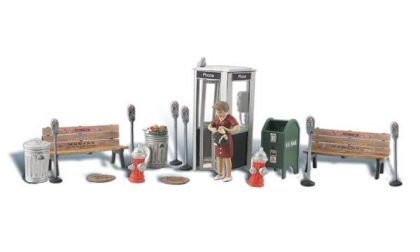
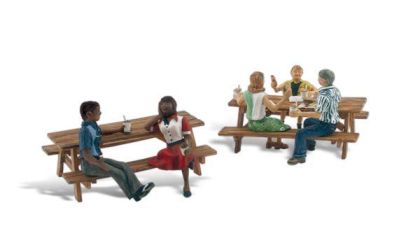
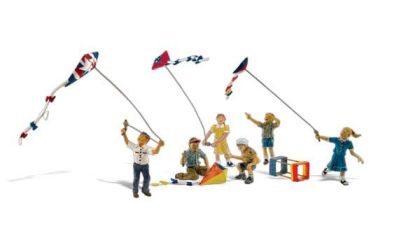
Figures are the quickest way to wake a layout up. In H0, approximately 1:87, a person stands about 20 mm tall and comes in themed sets: a road gang resurfacing a carriageway, mechanics over an open bonnet, people on benches, workers on steps, a family out walking, farm animals and wildlife. What matters here is the poses and the activities rather than the number of pieces, because a scene needs something happening in it, not a crowd.
Below we cover how to choose sets that work together and when it is worth touching in faces and hands with a brush.
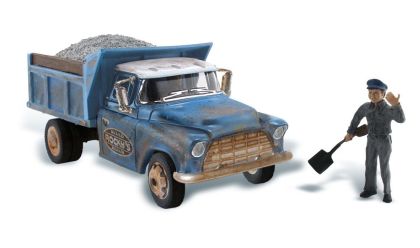
Two things. First it supplies scale: until somebody is standing next to a building, the eye has no idea how big it is. Second it creates a story — a figure bent over an engine explains why a vehicle is parked beside the line, and a passenger on a bench says a train is due. That is why sets are assembled around situations rather than head counts. Alongside people there are animals, which indicate size just as reliably and fill out rural scenes.
Pick the place and the action first, the set second. Figures scattered across a layout without a connection tend to break a scene rather than build one. One well-placed group at a loading dock does more than twenty figures spread over the board.
A figure has to match H0 or the discrepancy is visible at once, because the human form is the one thing the eye judges accurately. Watch the relative height of adults and children within a single set, too, so the proportions between them make sense.
Some figures are already coloured and can be placed straight away. On the rest it pays to touch in at least the face and the hands, because those are what catch the eye when somebody looks at the scene. That work wants the finest brush you own and good light.
Terrain and greenery around the figures come from diorama accessories, and the whole layout section is model railways. If you are after figures in larger scales to build and paint in detail, those are model figures.