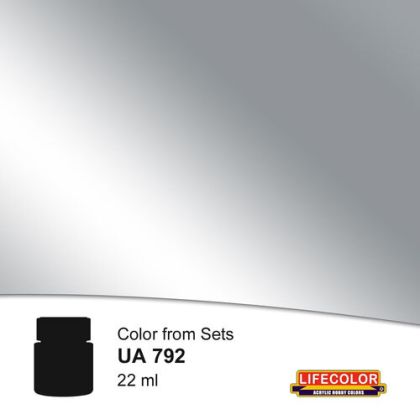
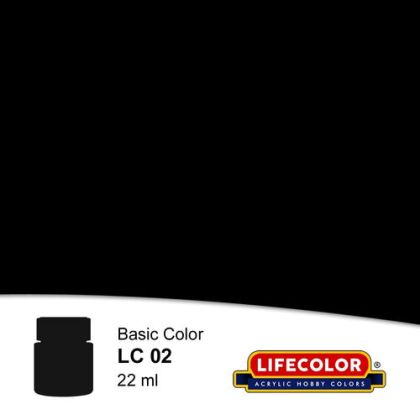
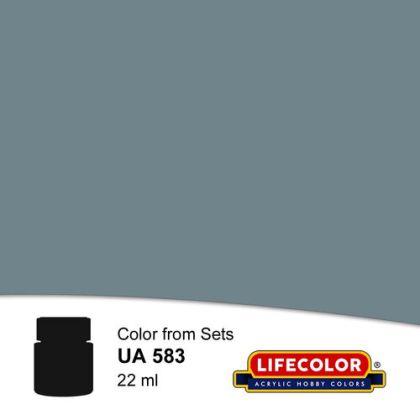
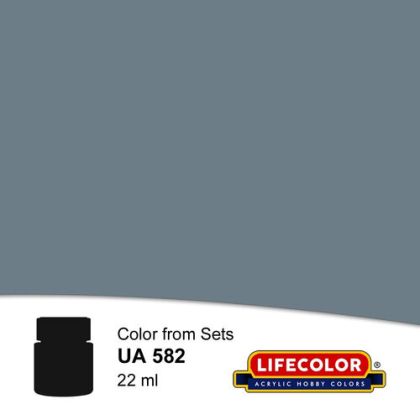
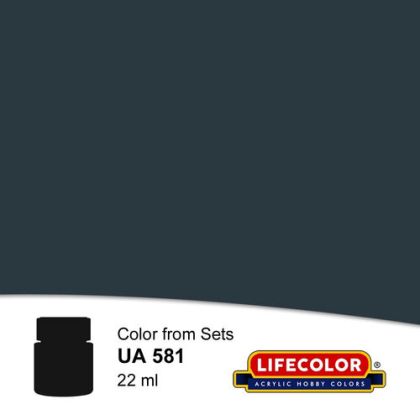
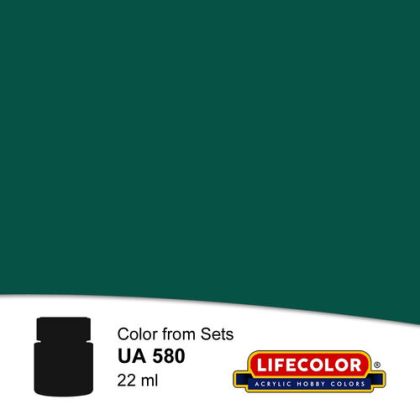
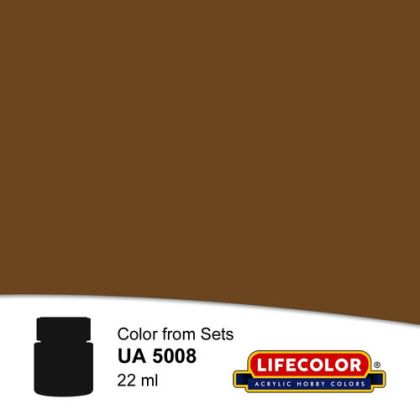
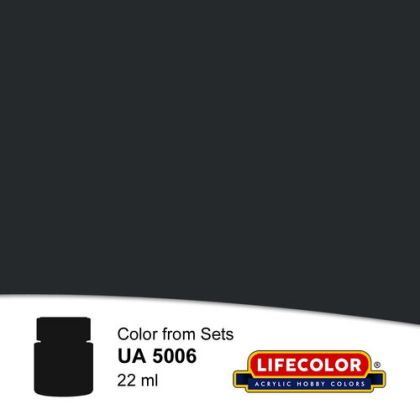
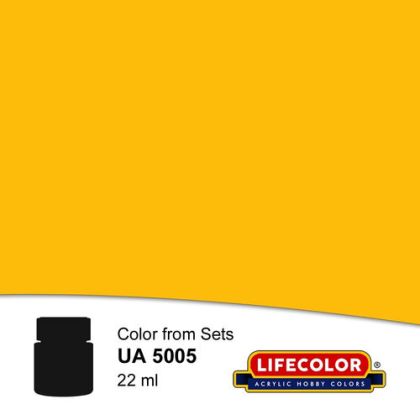
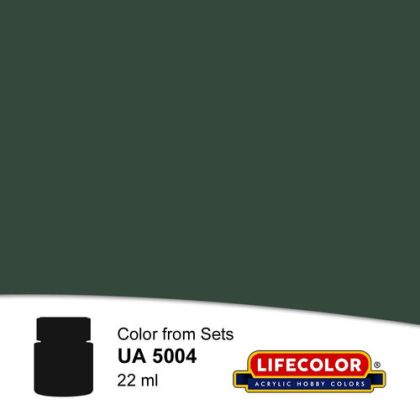
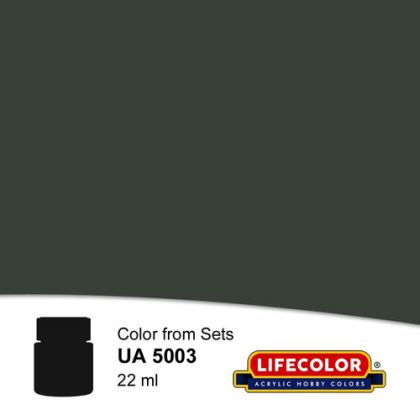
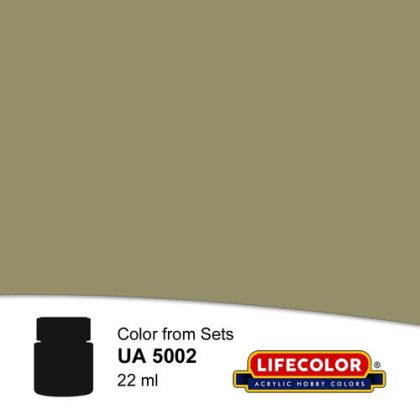
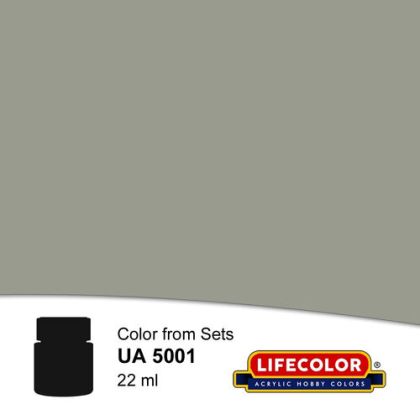
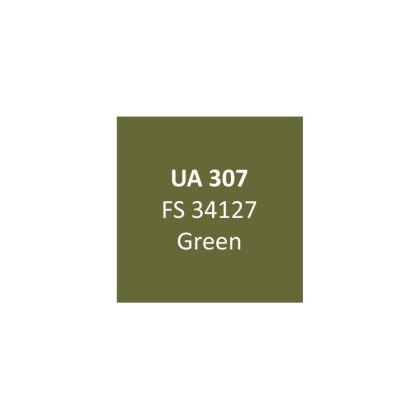
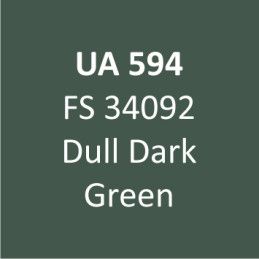
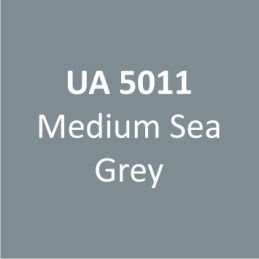
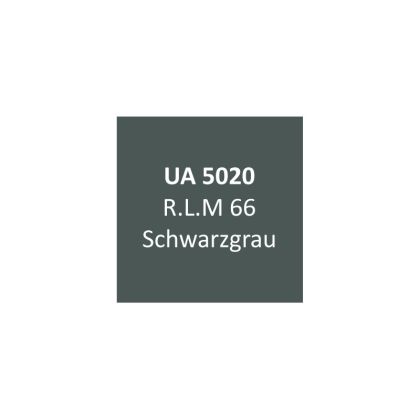
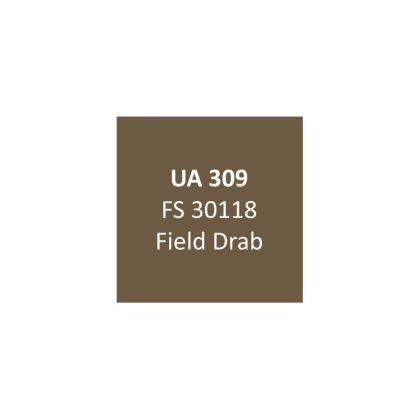
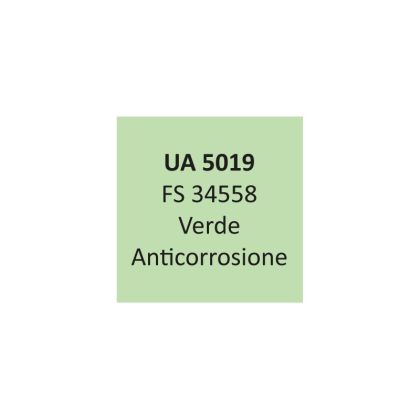
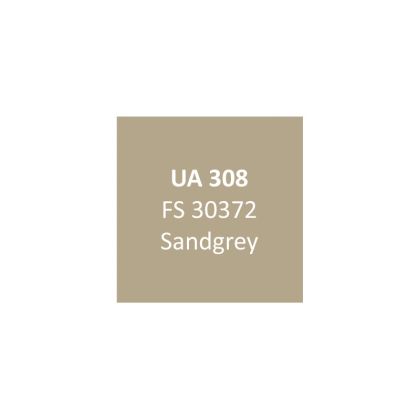
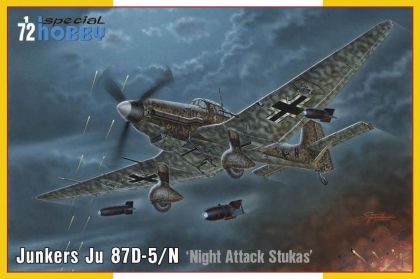
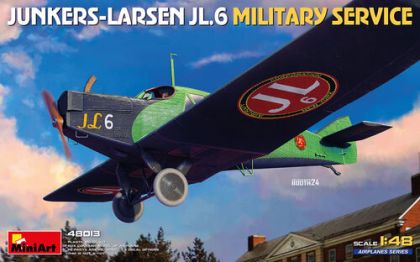
Lifecolor acrylics have a matt finish and shades referenced to standard codes, so finding the right tone is a matter of reading a number rather than judging by eye. The catalogue covers aircraft camouflage, interior tones, naval greys and shades taken from period documentation country by country.
The matt surface is a deliberate choice, because most real machines did not shine. It brings one consequence you need to plan for: a matt film is absorbent, so washes and glazes sink in wherever they touch. Sealing the surface before the next stage is the step that decides whether weathering looks like dirt or like a stain.
Two things. The first is the standard reference printed on the label: when a kit instruction quotes a code, the bottle takes seconds to find and no chips need comparing. The second is the matt surface, which dries not merely flat but faintly velvety, close to how the eye reads a large painted area at a distance.
The cost of that finish is absorbency, so plan a sealing coat into the schedule rather than treating it as an interruption.
Out of the bottle the paint is thicker than an airbrush will take. Thin gradually and judge the result by a test spray rather than by eye; suitable products are in thinners and cleaners.
Before washes, filters or decals, lay a thin satin coat from varnishes. Without it a wash bleeds into blotches and a decal leaves a visible glossy frame around itself. The matt look returns with a final flat coat once weathering is finished.
A standard shade describes fresh paint. After a few months in service the same finish looked different, usually lighter and greyer. Lift the centre of large panels slightly so the model does not look like it has come out of a paint shop; on machines used in desert or maritime conditions the shift is stronger still.
The other acrylic palettes on the shelf can be compared in acrylic model paints.