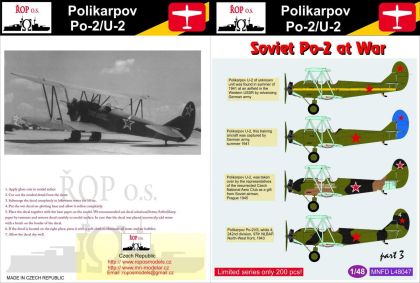
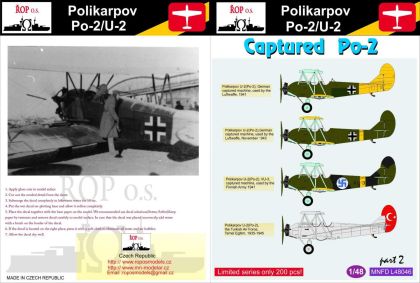
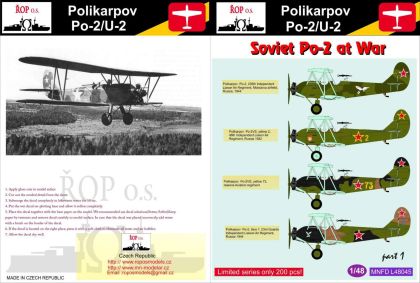
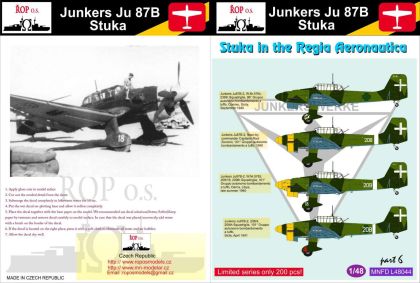
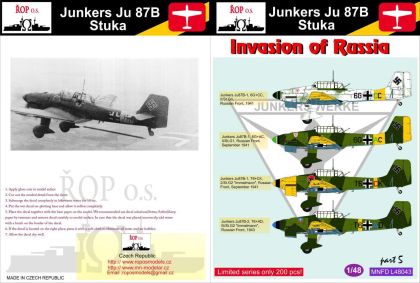
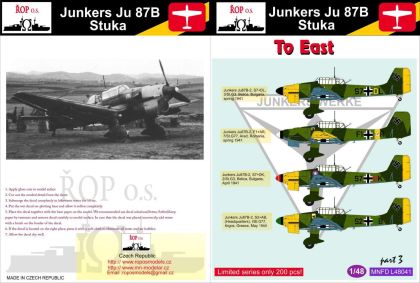
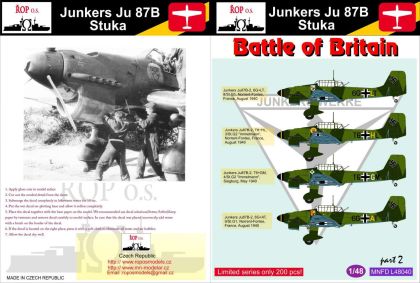
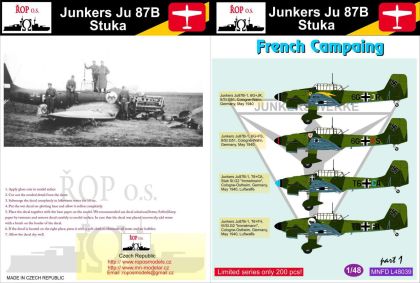
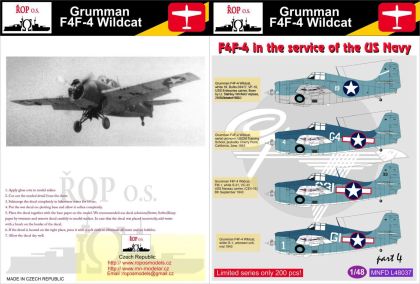
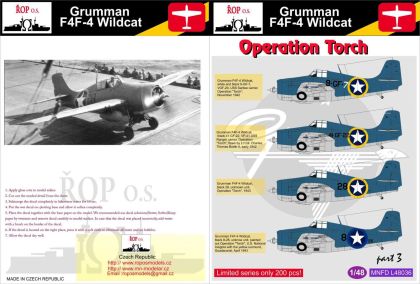
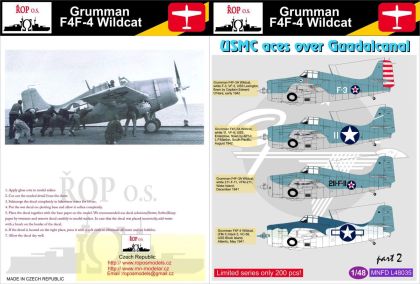
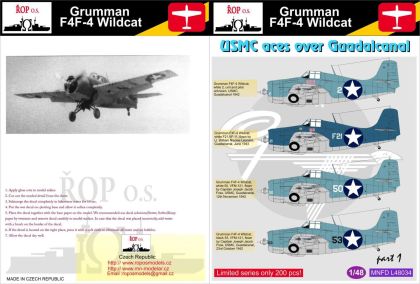
Large aircraft models are built for detail, and that applies to the markings as much as to the cockpit. These 1:48 sheets stay with documented machines and episodes: carrier torpedo bombers from the attack on Pearl Harbour through to Midway, dive bombers on the French, British, African and Eastern fronts, Soviet biplanes in their own and in captured service, American carrier fighters and their British counterparts. At this size even small technical lettering is legible, so the printing has to stand being looked at closely.
The packet contains the decals alone; the kit, the paints and the varnish are separate purchases.
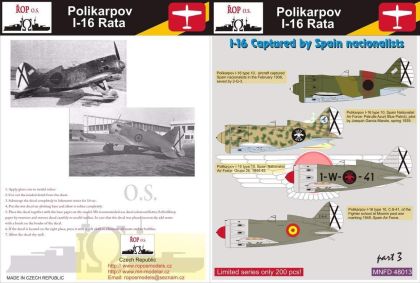 1:48 Polikarpov I-16 Rata - I-16 captured by Spanish Nationalists
7.96 €
1:48 Polikarpov I-16 Rata - I-16 captured by Spanish Nationalists
7.96 €
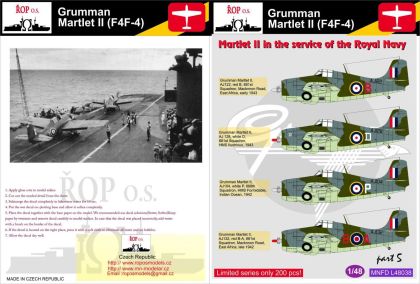 1:48 Grumman Martlet II (F4F-4) - Martlet II in the service of the Royal Navy
7.96 €
1:48 Grumman Martlet II (F4F-4) - Martlet II in the service of the Royal Navy
7.96 €
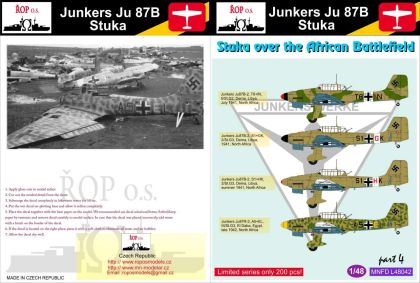 1:48 Junkers Ju 87B Stuka - Stukas over the African Battlefield
7.96 €
1:48 Junkers Ju 87B Stuka - Stukas over the African Battlefield
7.96 €
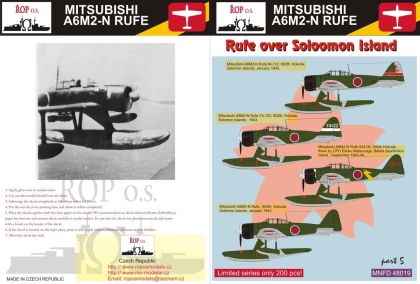 1:48 Mitsubishi A6M2-N Rufe - Rufe over Solomon Islands
7.96 €
1:48 Mitsubishi A6M2-N Rufe - Rufe over Solomon Islands
7.96 €
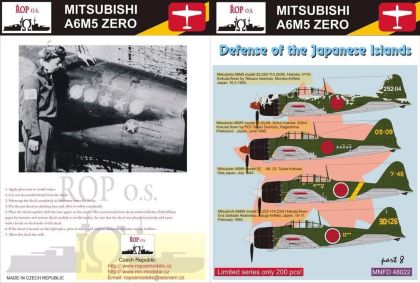 1:48 Mitsubishi A6M5 Zero Model 52 - Defense of the Japanese Islands
7.96 €
1:48 Mitsubishi A6M5 Zero Model 52 - Defense of the Japanese Islands
7.96 €
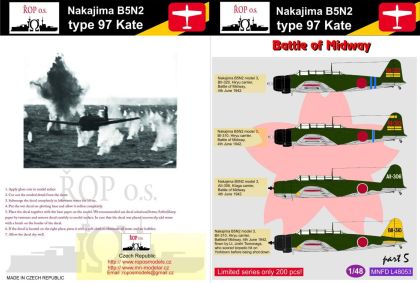
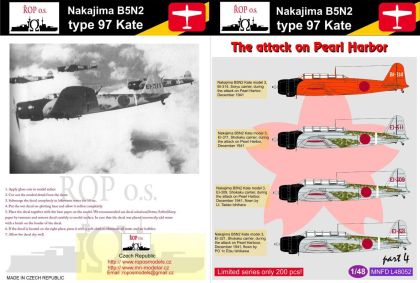
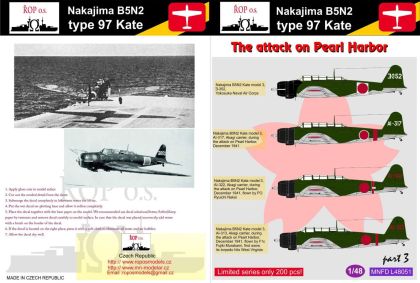
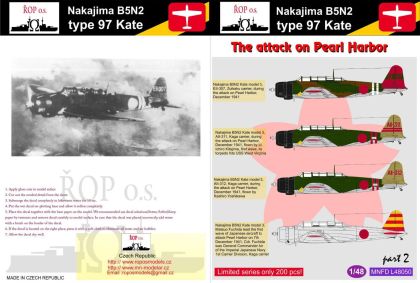 1:48 Nakajima B5N2 type 97 Kate - The attack on Pearl Harbour
7.96 €
1:48 Nakajima B5N2 type 97 Kate - The attack on Pearl Harbour
7.96 €
People build at 1:48 for the detail, and markings are judged by the same standard. A fighter has a wingspan of around twenty-five centimetres here, which invites a close look: a thin carrier film, crisp artwork and an edge that has genuinely disappeared all show as plainly as the quality of the camouflage. The bigger the model, the more careful the gloss surface underneath has to be.
Sheets are tied to a type and a version. Check the version rather than the name: between variants of a carrier aircraft the cowling shape and the position of the markings differed, so printing laid out for a later machine may not sit on the panel of an earlier one.
National insignia changed through the war, and the same type carried different versions of them at different dates. Choose the period before the camouflage, because both have to agree.
If you are replacing the cockpit or adding fine metal and resin parts, do the decals after those have been sealed, so that handling does not lift or scratch the printing.
At 1:48 every step of the method shows. Gloss varnish that has not fully hardened leaves matt patches under the film. Excess water trapped beneath dries as a visible outline. Trimming the carrier too generously shows up on a light surface as a glossy rectangle. Time spent preparing the surface repays itself more here than at any smaller scale.
The same subjects in small scale are in 1:72, and the whole aircraft range is under ŘOP aircraft decals.