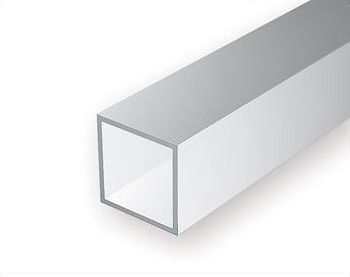
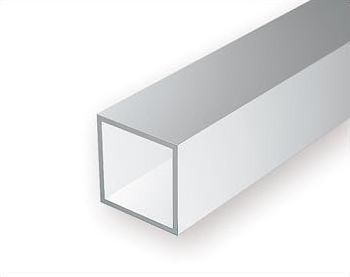
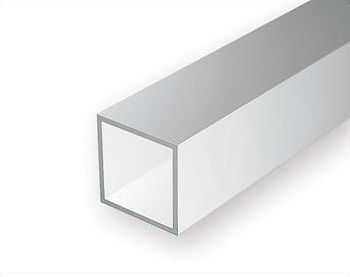
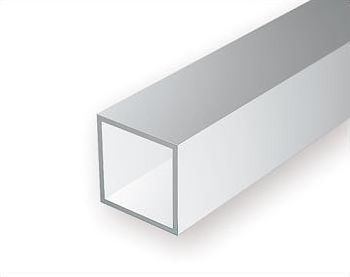
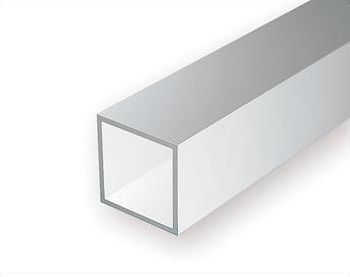
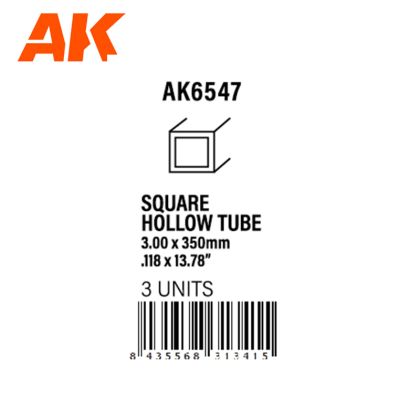
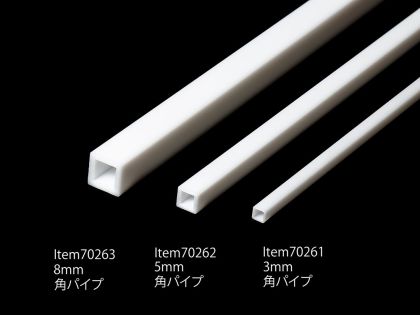
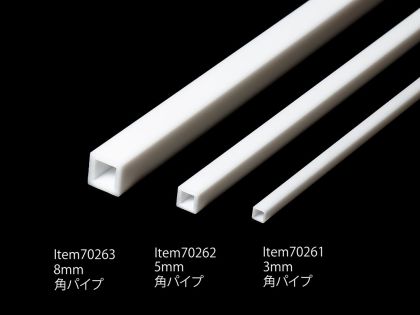
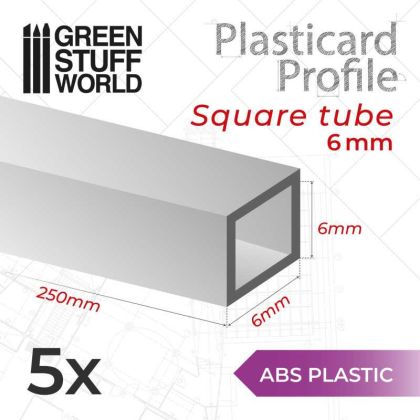
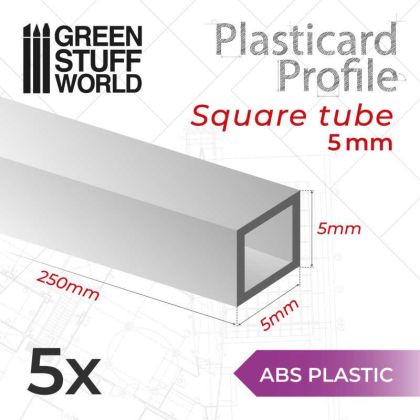
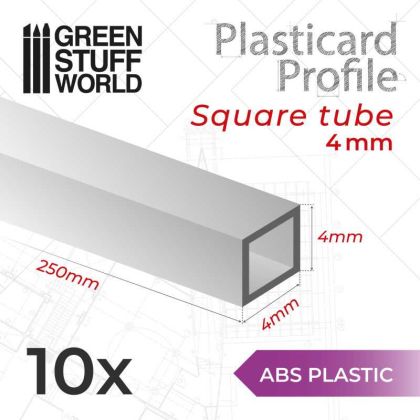
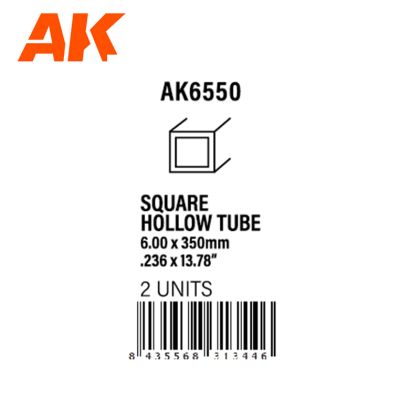
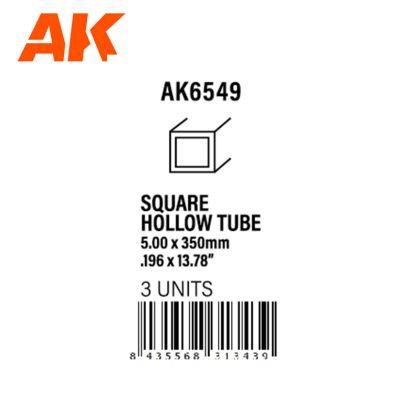
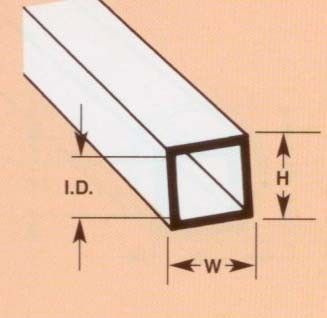
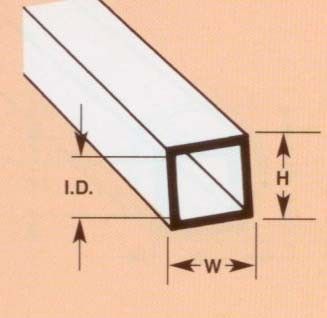
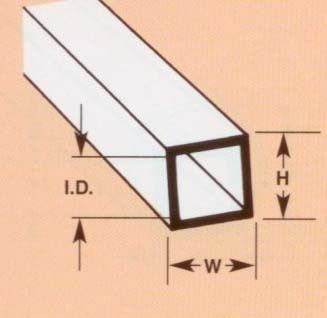
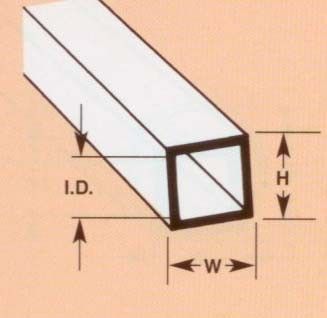
Styrene square tube is box section: a square outer profile with an empty bore. Sizes run from three millimetres to nine and a half, the wall is around 0.6 mm and the length 350 or 375 mm.
From it come chassis frames, scaffold members, lean-to posts and the tubular structure of a load bed. Against solid rod of the same size it weighs less, cross-drills more easily, and short lengths will slide one inside the next, which is useful for anything that has to extend or pivot.
Anywhere the real structure is built from square tube. Lorry chassis rails, tubular protective cages, tarpaulin posts, container corner posts, scaffolding on a building, trailer frames. The advantage is that the section has flat sides, so it seats against a surface with no gap and the glued joint is strong without any filling.
A 5 mm box section reads in 1:35 as a tube 17.5 cm across the flat, a realistic size for the main frame of a heavy vehicle. In 1:48 that becomes 24 cm and in 1:72 some 36 cm, which is a pillar rather than a tube. For the smaller scales, choose the smallest series from three millimetres, and for finer frames use the H beams instead.
If you plan to telescope or pivot the part, buy two adjacent sizes: the smaller box slides into the larger and holds itself. That suits extending props and telescopic legs. For the oblong section that real chassis rails actually use, carry on to the rectangular tube.
Styrene box section bonds to the rest of the plastic with solvent and sands flush with the part. If the member will carry weight or project from the model, the brass version in the hollow brass box section makes more sense, because it will not fold and it can be soldered.
Square tube is basic stock for scenes and industrial buildings, which follow on in the diorama accessories.