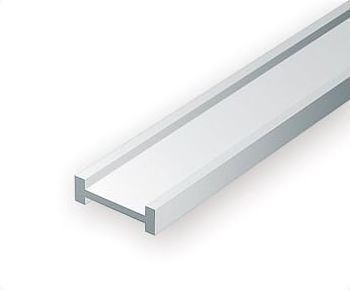
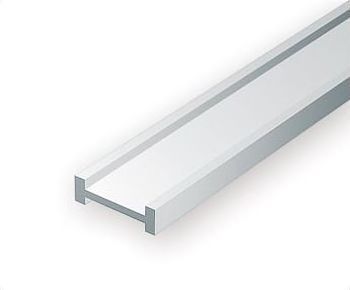
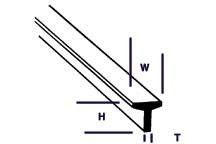
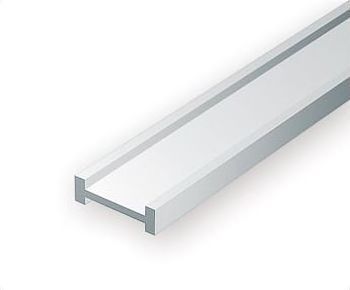
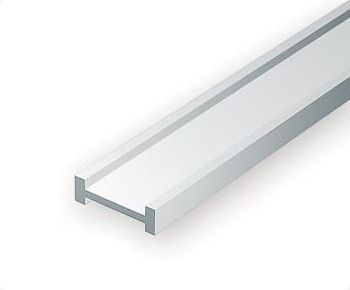
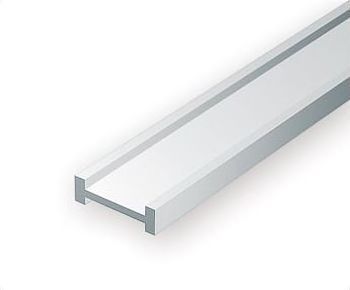
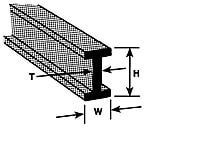
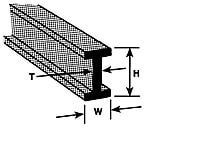
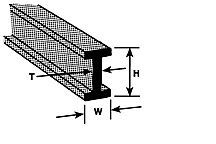
The I profile is a beam deeper than it is wide: two narrow flanges with a web between them. It works in one axis, so full-size it serves as horizontal traverses, chassis rails and floor beams, and it is used the same way on a model.
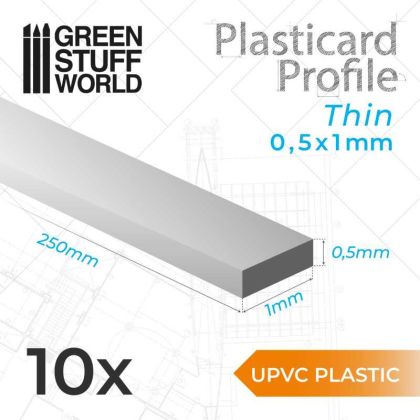
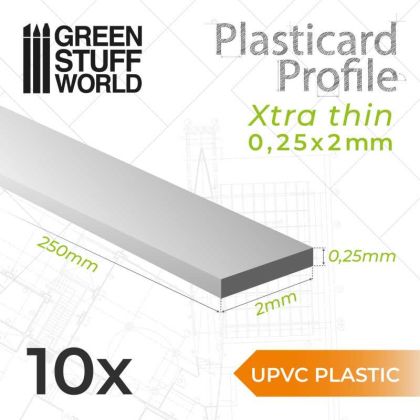
Beside beams from 1.6 to 6.4 mm, this group also holds very thin ABS strip from 0.25 mm thick, used for edging, plate trims and fine banding in small scales. Both add a line to a model that no moulding carries by itself.
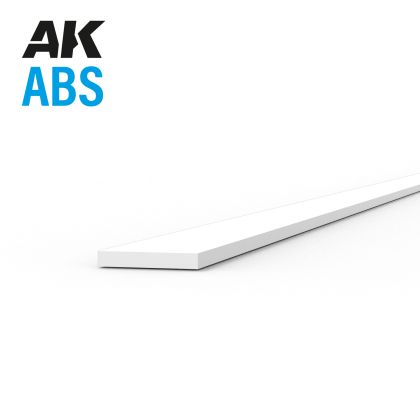
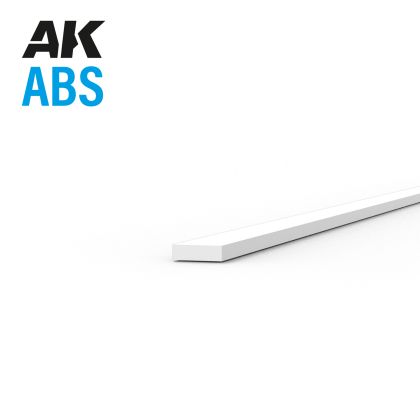
Two groups of stock that often meet on the same build. First, I beams in several depths from 1.6 mm to 6.4 mm, with a thin web and narrow flanges. Second, very thin ABS strip in 0.25, 0.50 and 0.75 mm thicknesses and widths from half a millimetre to five, supplied several pieces to a pack. A thin strip is to a surface what a beam is to a structure: both add a line the moulding does not have.
An I section belongs where the member lies horizontally and carries load in one direction: a traverse over a doorway, a chassis rail, the beam a crane trolley runs on. For columns and symmetrical structures the H beam is better, because its equal flanges look robust from every side.
A 0.25 mm strip reads in 1:48 as plate about twelve millimetres thick, so a realistic trim or edging. The same strip in 1:16 becomes a four-millimetre plate, so reach for the heavier series in large scales. For lines finer still, scribers and panel line tools create the line by removing material rather than adding it.
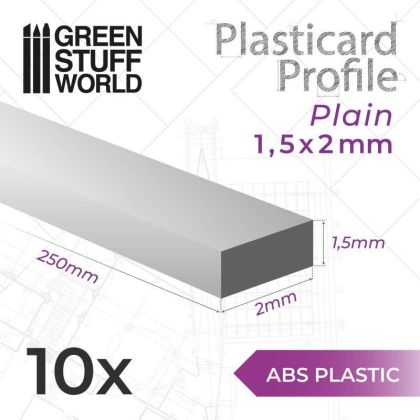
The thin strip here is supplied in ABS, which is stiffer than styrene and will not ripple along its length, so it holds a straight line over a long edge. In exchange it reacts more slowly to solvent cement: give the joint longer and do not disturb it. For solid rectangular sections, carry on to the square rod and strip.
Fine trims and edging earn their keep most on aircraft, so the kits behind that work are in the aircraft model kits.