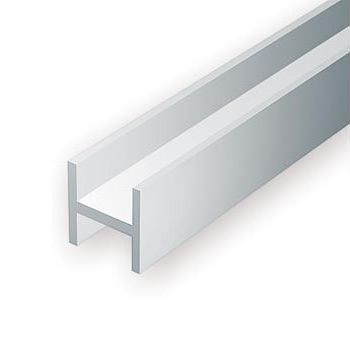
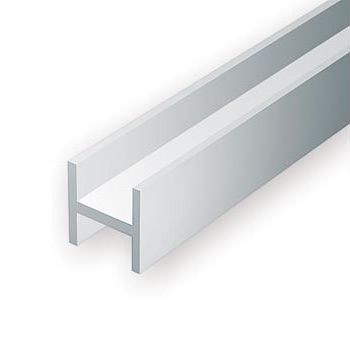
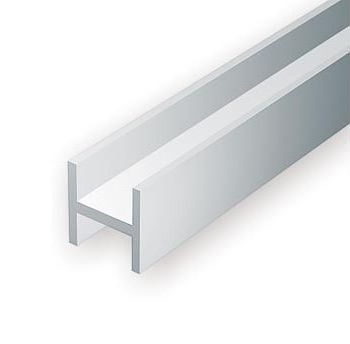
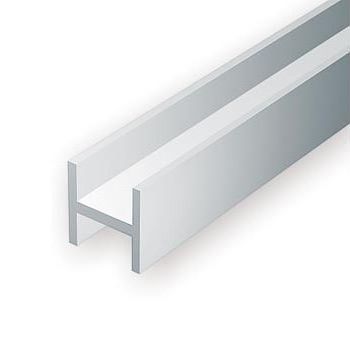
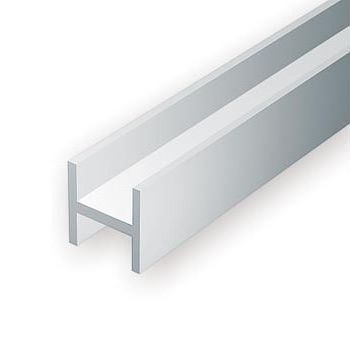
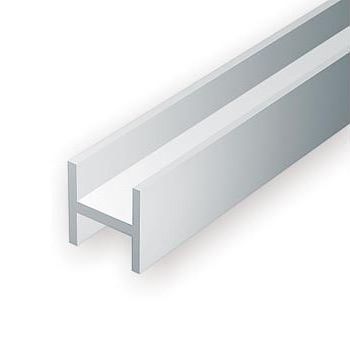
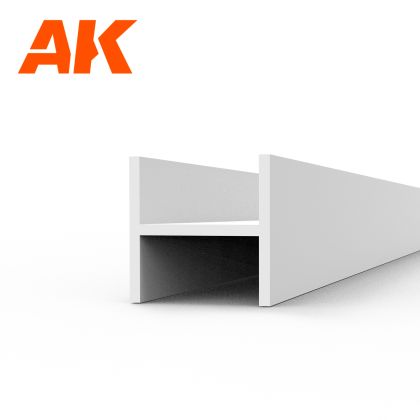
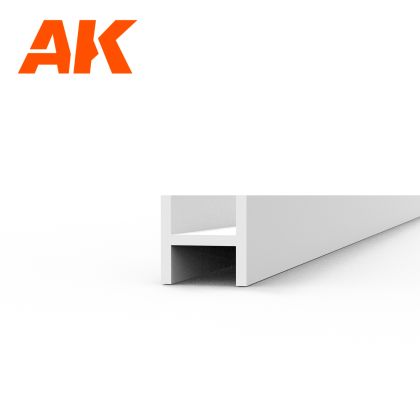
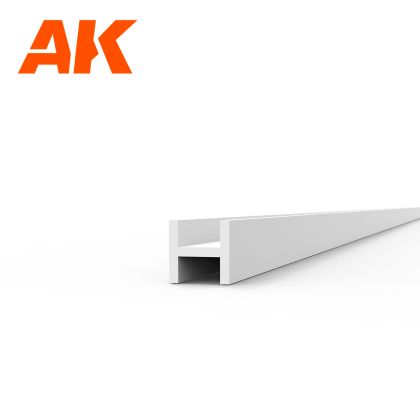
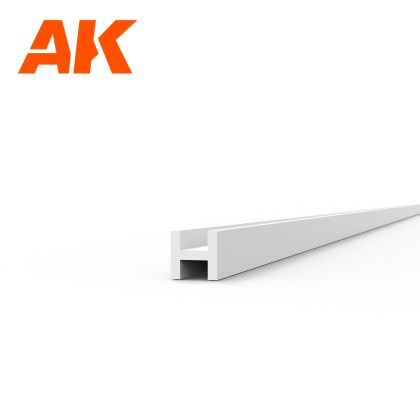
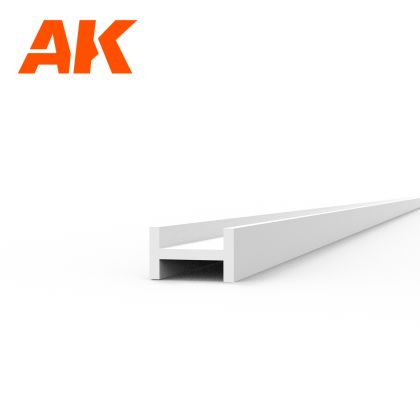
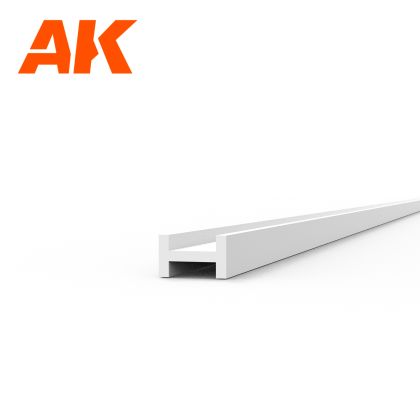
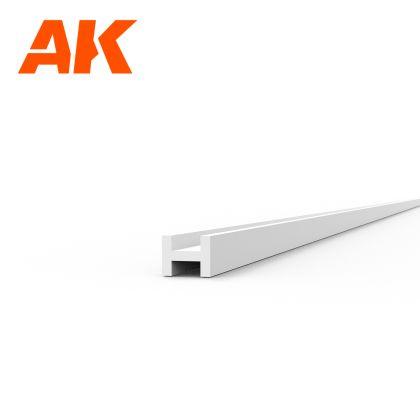
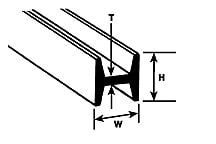
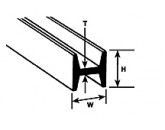
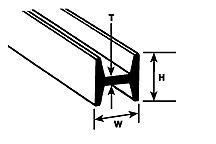
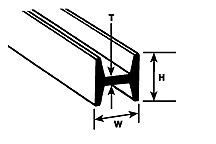
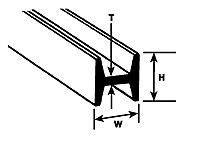
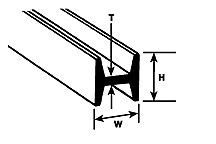
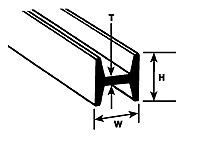
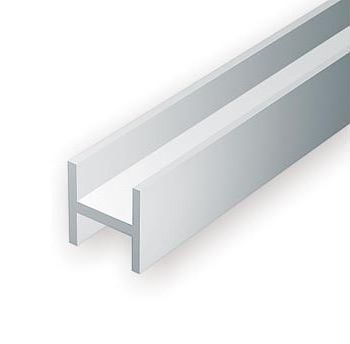
The H profile is a beam with two equally wide flanges joined by a web, so its section really does look like the letter. In construction and engineering it holds up cranes, bridge structures, shed frames and chassis bearers, and it does exactly the same job on a model.
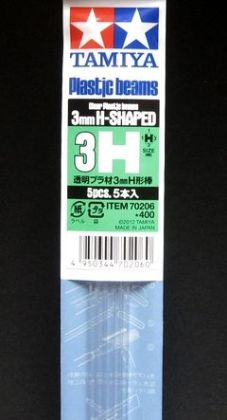
Sizes run from one and a half millimetres to nine and a half, walls from 0.5 to 1.4 mm, and the longer pieces measure 375 or 600 mm. Because both flanges match, the beam looks symmetrical from any side, which matters on an exposed structure.
Whenever the structure will be visible and has to read as built from steel section. Lattice cranes, gantries, bridge girders, track supports, industrial shed frames, loading ramps, the bearers of a heavy chassis. Since both flanges of an H are the same, it can be stood either way up and still looks symmetrical from every angle.
A 4 mm H section reads in 1:35 as a beam roughly fourteen centimetres deep, the size of an ordinary rolled structural section. In 1:72 the same piece becomes a beam almost thirty centimetres deep, so a main bridge girder. Pick the size from the element you are imitating rather than by eye.
An H has flanges as wide as the web is deep, or close to it, so it looks robust and is used for columns. An I is deeper than it is wide and belongs where the beam works in one axis only, as horizontal beams and traverses do. A few I sections are listed here as well; the complete run of them, in further sizes, sits under I profiles.
Do not start a lattice structure with the longest member. Glue the uprights up on a flat surface first, add the horizontals, and leave the diagonals until last. Thin square rod braces well, because it is easy to trim to an angled length.
Steel structures usually form part of a scene or an industrial setting, and the stock for those follows in the diorama accessories.