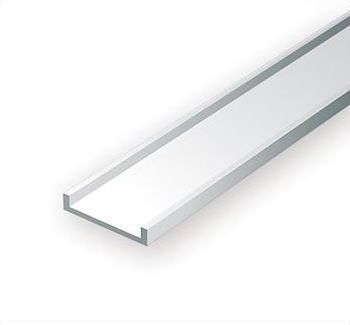
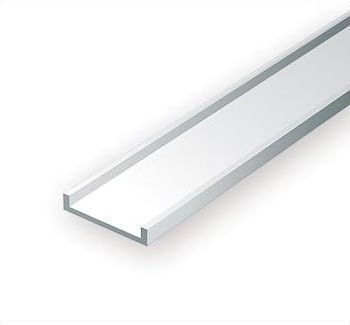
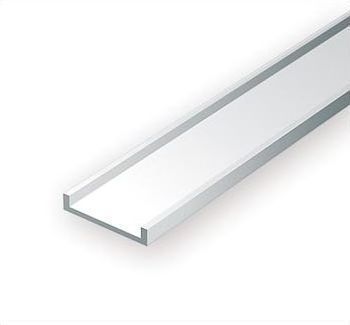
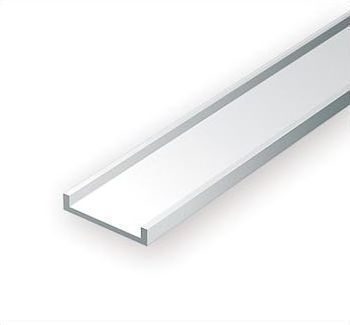
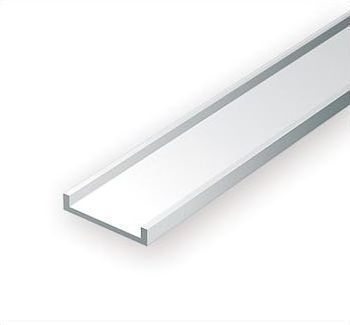
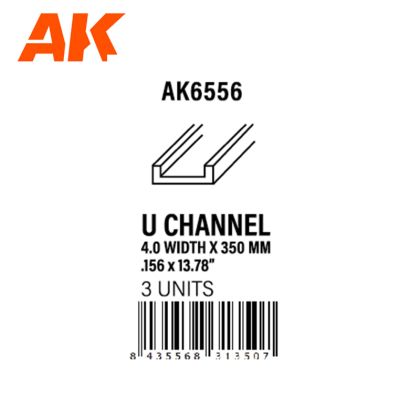
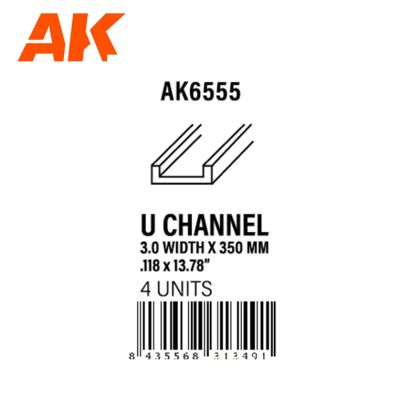
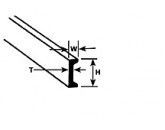
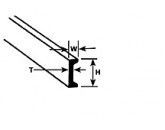
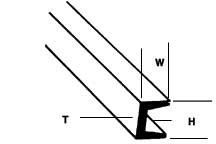
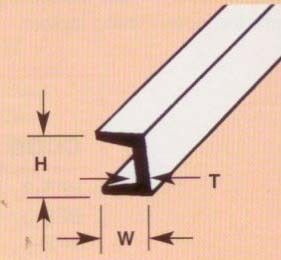
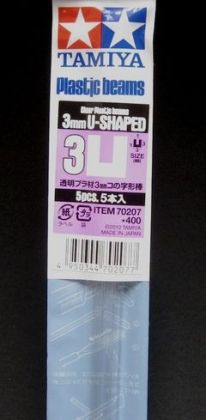
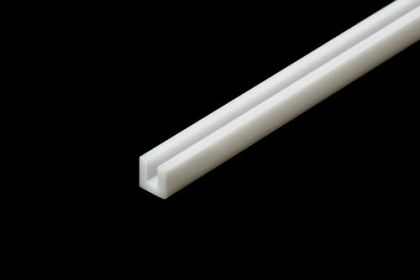
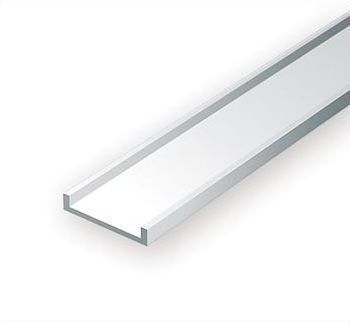
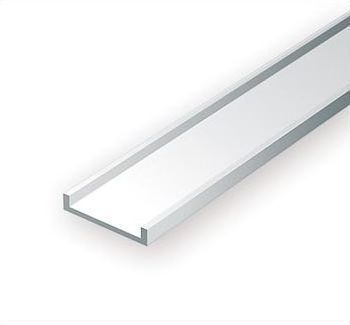
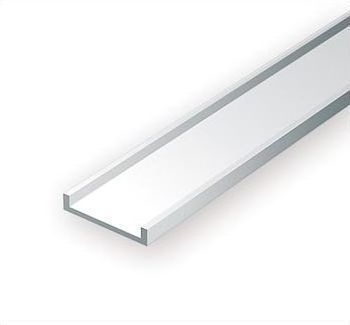
The U profile is a channel: two upright legs with a base between them. The C profile is its variant with the leg tips turned in, so the section resembles the letter C. Both are used the same way on a model: as gutters and drainage channels, rails and guide tracks, load-bed sides, sliding-door frames and the members of light structures.
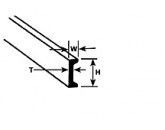
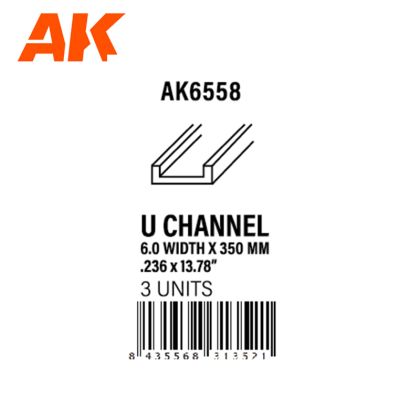
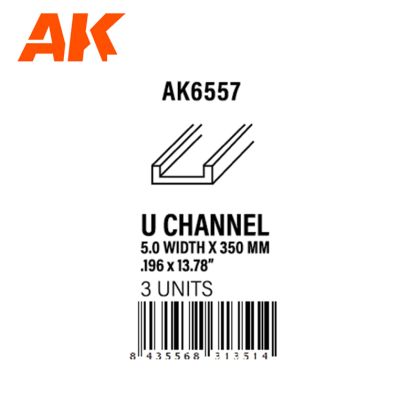
Widths run from 1.6 mm to 7.9 mm, walls from 0.4 to 1.1 mm, and the longest pieces are 600 mm. A ready-made channel saves filling and sanding two seams.
The main reason to buy a U section is time. A channel assembled from three strips has two seams that have to be filled and sanded, and the base is never evenly deep along its length. A moulded section has base and legs in one piece, so the moment it is cut it is usable, and another profile or a length of wire can be dropped straight into it.
With channels what matters is the clear width between the legs, because something usually goes into it: a rail, a guide strip, a cable loom. Measure the part going in first and pick a section slightly wider, letting the cement take up the rest. For round inserts, round rod is the companion piece.
A U has the legs cut off square; a C has them turned inwards. The turned lip matches the thin-walled pressed sections used in real construction and looks slighter, while a square leg suggests rolled material and heavier structures. Both series are stocked side by side.
A channel opening upwards is a gutter, a drainage trough or a rail. Turned on its side it becomes the guide track of a sliding door or the edge trim of a body side. Opening downwards it reads as a capping or a cover over a cable run. Where only one leg is needed, the L angle takes over.
Gutters, rails and guide tracks are typical features of buildings and scenes, and the stock that follows on is in the diorama accessories.