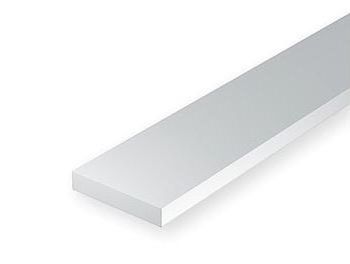
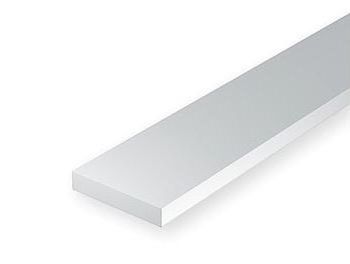
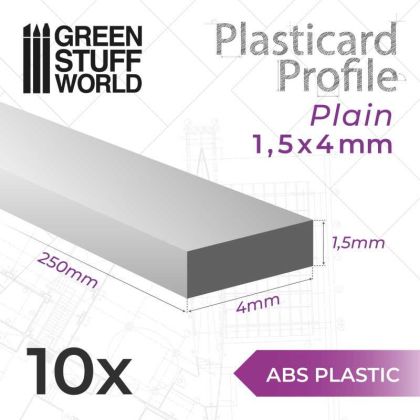
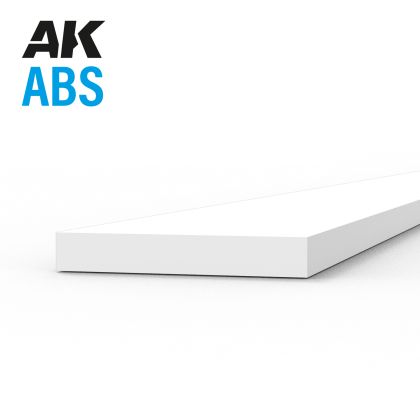
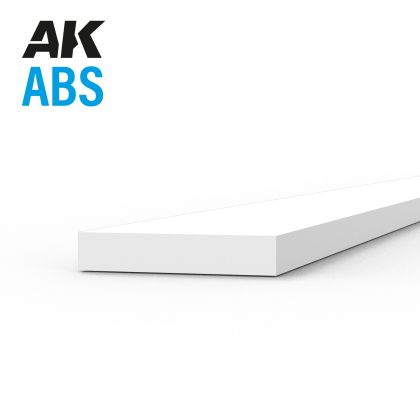
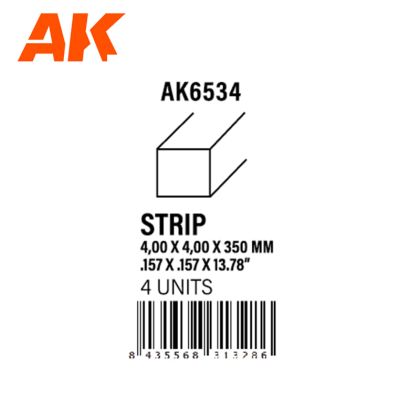
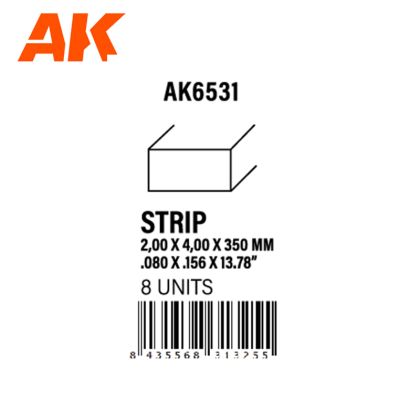
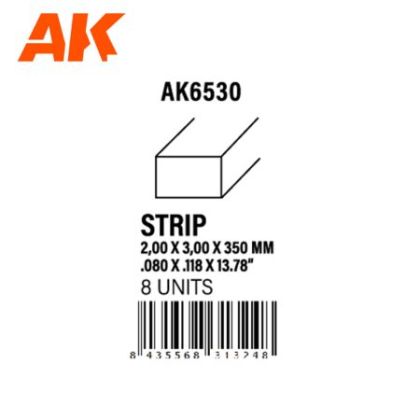
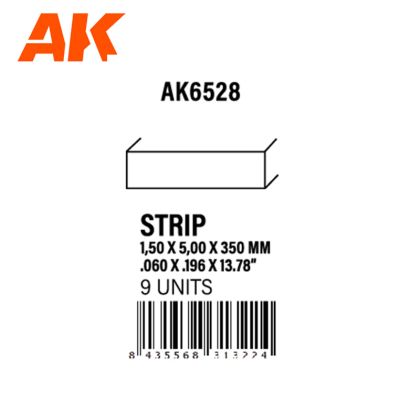
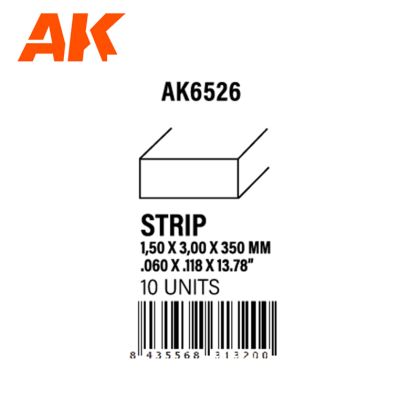
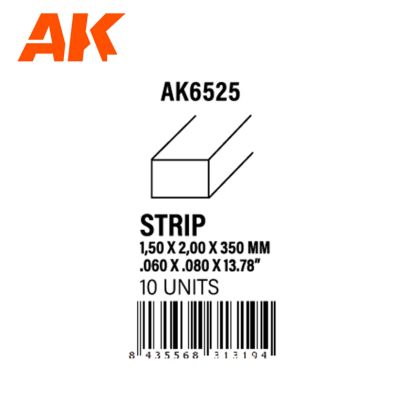
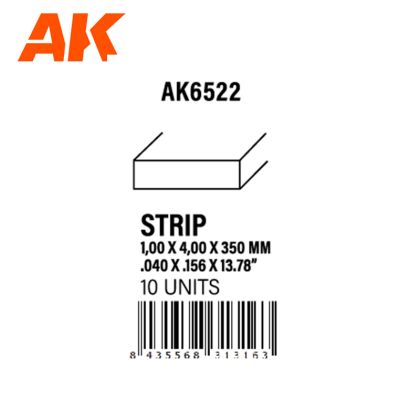
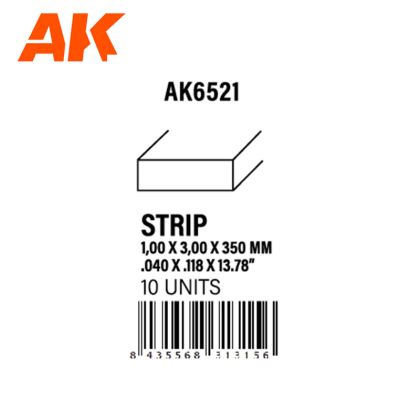
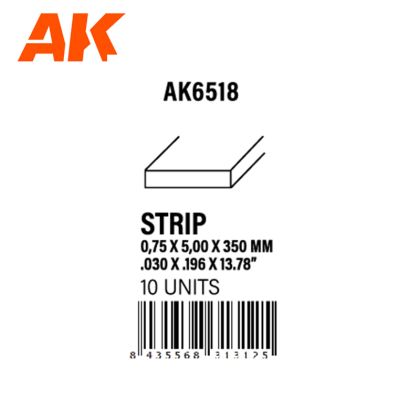
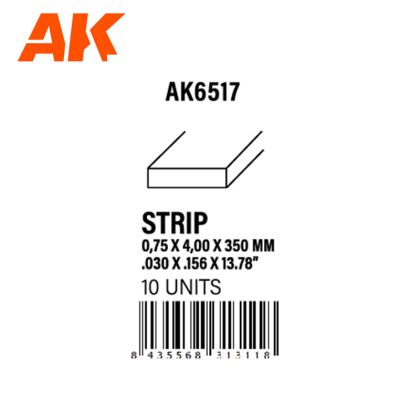
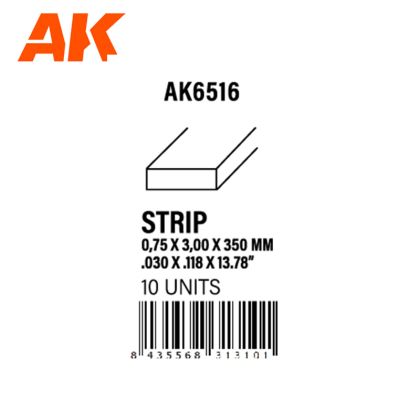
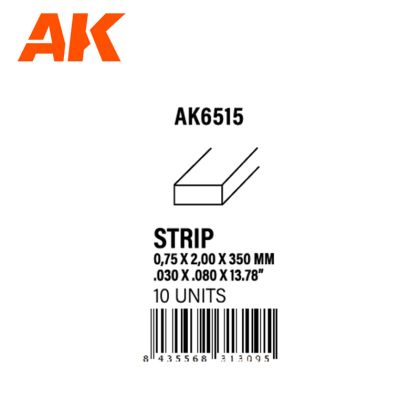
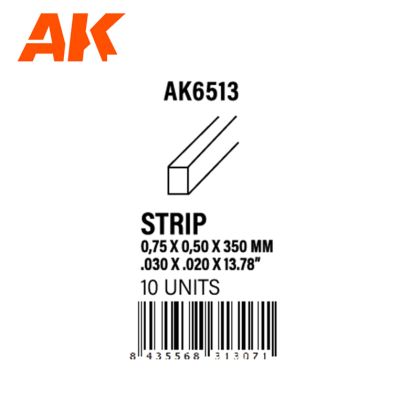
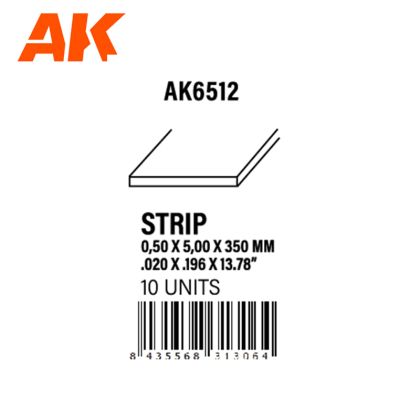
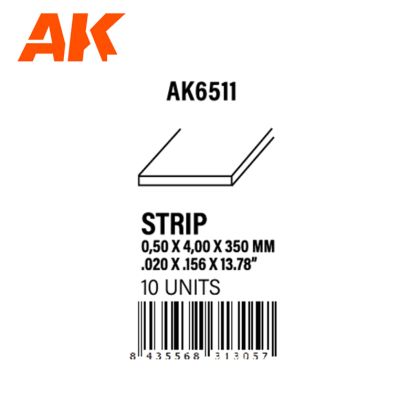
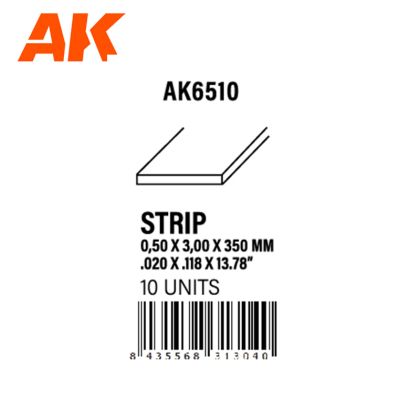
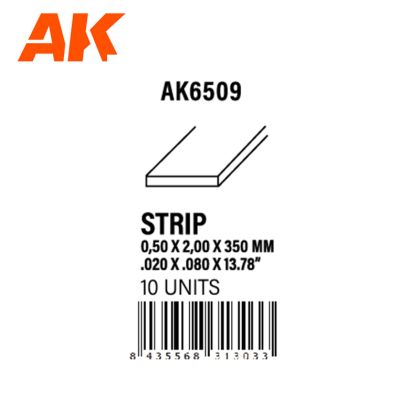
Styrene square rod is solid stock with a rectangular section, and of all the profiles it is the one you will reach for most. Strip starts at 0.25 mm thick, the heaviest square pieces are 6.3 × 6.3 mm, and lengths are 250 and 350 mm. Beside styrene there is harder ABS strip and very thin uPVC edging.
From one pack come deck planks, a bonnet frame, floor trims and the hidden braces that keep a seam together. A strip is cut to whatever length you need and fits the one dimension the kit never gave you.
A solid rectangular section, in other words a strip or a beam. It is quoted as two figures, thickness by width, such as 0.75 × 3.00 mm; the square versions have both figures the same, as in 2 × 2 or 4 × 4 mm. Because the material is solid it can be sanded into a wedge, drilled and glued on the flat, and it will not collapse under clamping pressure the way a hollow section does.
Thin strip under 0.5 mm makes edge trims, surrounds and plate banding. Middling sizes around 1 × 2 mm are planks, benches and decking. Heavy sections from 3 mm up stand in for beams, bases and frames. Hidden bracing is a category of its own: a 2 mm piece glued inside a fuselage holds two dry-fitted halves in exact alignment.
Convert before you cut. A 1 × 3 mm strip reads in 1:35 as a plank 3.5 by 10 cm, which is exactly the timber that boarding and bodywork are built from. In 1:72 the same strip becomes a beam seven centimetres thick, so for fine trims at that scale reach for the thinnest series and for the slim I sections.
Styrene is softer, parts in one pass of a blade and takes solvent cement reliably. ABS is stiffer, holds a true line over a long piece and suits places where the section carries load or has to flex slightly. If you also need a corner piece, the L angle follows on from the square rods.
Square rod is heavily used on scenes and buildings, where it becomes boarding, fencing and timber framing, so the related stock is in the diorama accessories.