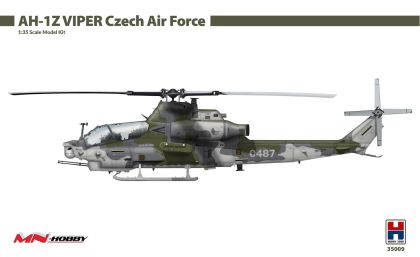
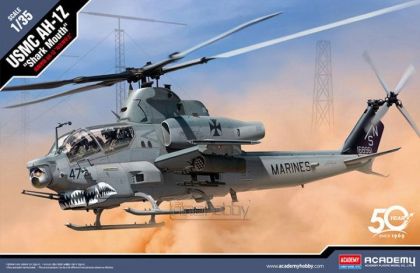
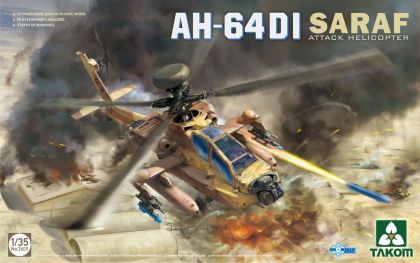
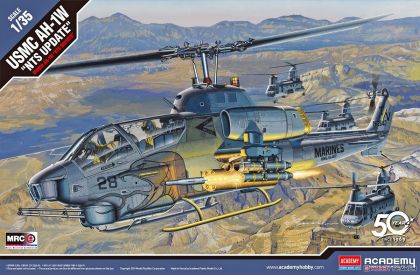
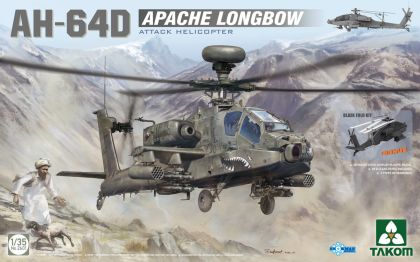
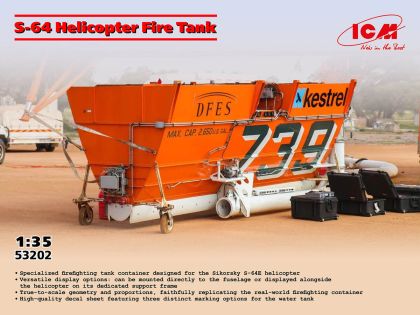
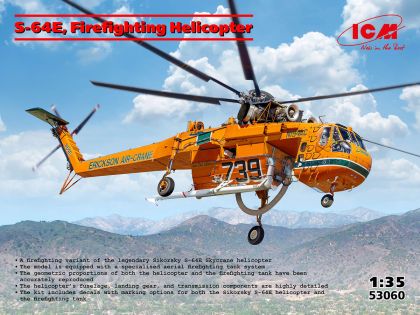
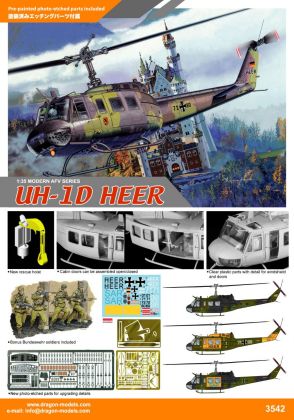
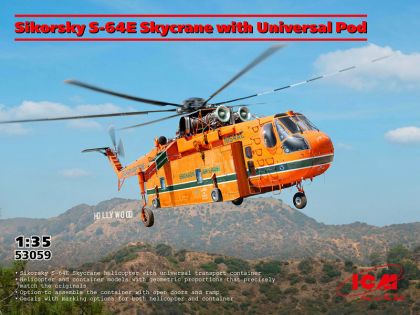
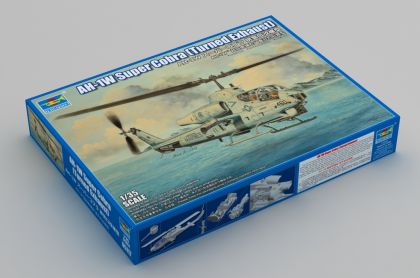
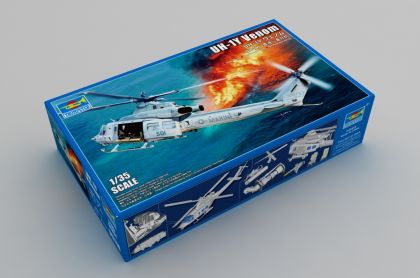
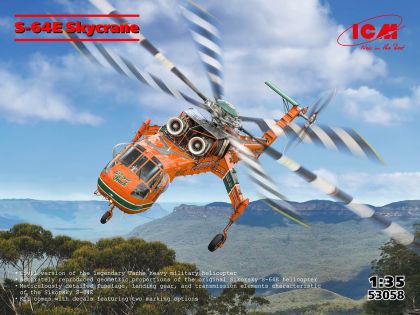
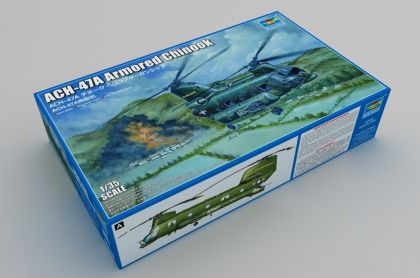
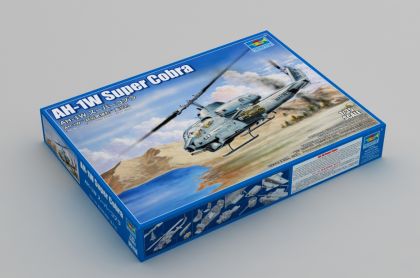
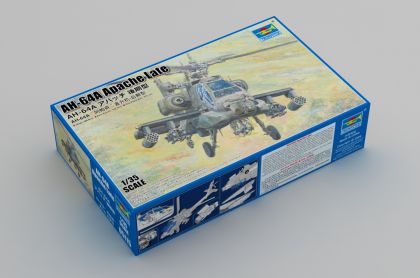
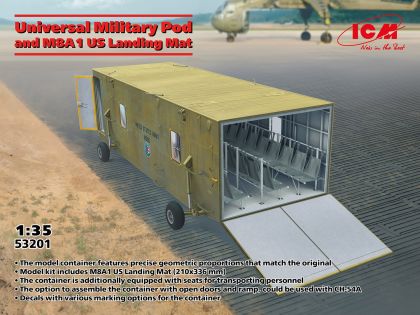
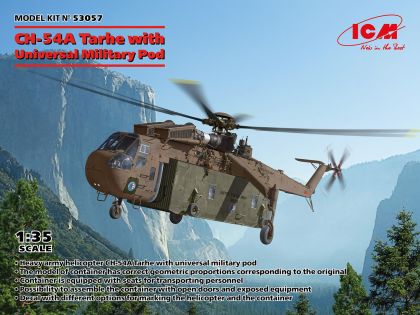
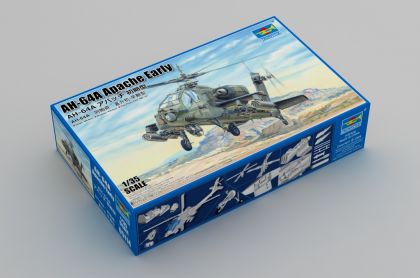
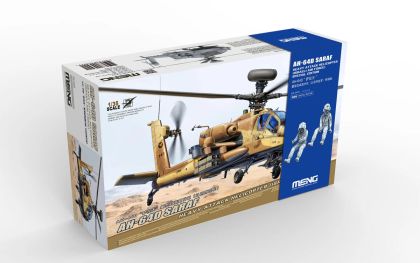
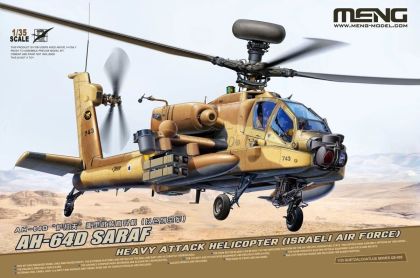
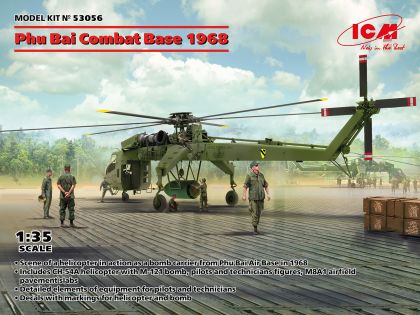
Helicopter model kits in 1:35 share their scale with armour and figures, and that is what makes them the diorama choice: a UH-1 Huey putting down beside an armoured vehicle reads correctly because everything is the same size. Subjects run from the AH-1W and the AH-1Z Viper in Czech Air Force colours through the AH-64 Apache to the crane-bodied Skycrane in firefighting guise, and on to a complete base scene. Below, how to get the most out of the scale.
Thirty-fifth is the home scale of tanks, armoured vehicles and figures. A helicopter in it is not a lone exhibit but a natural part of a scene — a Vietnam Huey, a modern UH-60M, a CH-54 carrying a transport pod. The scale also brings subjects that go missing elsewhere: a Skycrane with a water tank, an armoured Chinook. Kits often think about scenic use and add cargo pods, landing matting or a complete base.
If a scene is the plan, look for boxings with crew or infantry figures, and subjects with cargo doors moulded open — that is where the story actually happens.
Gunships with loaded pylons carry noticeably more parts than transports. A first build in this scale goes more smoothly as a simple transport type; an Apache with a detailed stores fit suits someone with hours behind them.
A helicopter off an operational strip was never clean. Dust up the lower fuselage and scuff the cargo doors — in 1:35 that is baseline, not a refinement, because the scale is large enough for a viewer to look for it. Exhaust staining down the rear fuselage and the polished metal of a cargo floor are two details that take minutes and change the whole character of a finished machine.
Measure before you cut anything. A rotor disc in thirty-fifth scale is wide, and a scene that fits the airframe but not its blades is a frustration you only discover once the model is finished. Plan the base around the full span, or around folded blades if the subject allows them.
The complete rotary-wing line-up from 1:24 to 1:700 is laid out in helicopter model kits.